
Right to Education Act India: What Every Parent Should Know
A few months back, a relative of mine in Jaipur was trying to get her son admitted into a private school under a reserved quota, and honestly, she had no clue where to even start. That’s the thing about the right to…
A few months back, a relative of mine in Jaipur was trying to get her son admitted into a private school under a reserved quota, and honestly, she had no clue where to even start. That’s the thing about the right to education act india — most people have heard the name, but almost…
A few months back, a relative of mine in Jaipur was trying to get her son admitted into a private school under a reserved quota, and honestly, she had no clue where to even start. That’s the thing about the right to education act india — most people have heard the name, but almost nobody knows what it actually guarantees them.
Let’s fix that today.
What Is the Right to Education Act, Really?
The right to education act india (commonly called RTE) came into force back in 2010. In plain terms, it makes free and compulsory education a legal right for every child between 6 and 14 years old.
Quick answer: The RTE Act guarantees free elementary education to children aged 6-14 in India, and requires private unaided schools to reserve 25% of entry-level seats for children from economically weaker sections.
It’s not just some policy document sitting in a government file. It’s enforceable — schools that violate it can actually lose recognition.
The 25% Reservation Rule Nobody Explains Properly
This is the part that confuses most parents. Under the right to education act india, private schools have to keep 25% of seats at the entry level (usually nursery or Class 1) for kids from economically weaker sections and disadvantaged groups.
I’ve noticed that a lot of schools quietly try to dodge this, or make the process so complicated that parents give up halfway. That’s not okay, and if you’re eligible, don’t let a school’s front-desk staff bully you out of applying.
- Income certificate is usually required (state-specific limits apply)
- Caste certificate needed if applying under SC/ST/OBC category
- Residence proof within the school’s catchment area
- Birth certificate of the child
Who Actually Qualifies Under RTE?
Eligibility isn’t just “poor families.” It covers a genuinely wide net:
- Children from families below the state-defined income line
- Children with disabilities (as per the RPWD Act)
- Orphans and children without a fixed home
- Children of HIV-affected parents in some states
Each state sets its own income cutoff, so what qualifies in Rajasthan may differ slightly from Maharashtra. Worth checking your state education portal directly.
How Reimbursement Works for Private Schools
Here’s something most parents never ask about — private schools aren’t just donating those seats out of goodwill. The government reimburses them, either based on the state’s own per-child expenditure or the school’s actual fee, whichever is lower.
In my experience, this is exactly where delays happen. Schools sometimes complain reimbursements are slow, and that occasionally makes them reluctant. It’s a real friction point in the system, not just parent paranoia.
Common Mistakes Parents Make While Applying
- Applying after the deadline (portals usually open once a year, briefly)
- Not double-checking the distance/catchment criteria
- Submitting blurry or incomplete document scans
- Assuming one rejection means no other options — apply to multiple schools within your zone
[link to related guide on private school admission documents here]
Does RTE Cover Education Beyond Class 8?
Direct answer: No — the RTE Act’s free education guarantee legally applies only up to Class 8 (age 14). Beyond that, schooling isn’t automatically free, though some state schemes extend support informally.
This genuinely surprises people. A lot of parents assume the guarantee continues till Class 10 or 12, and honestly, I think that’s a real gap in the law that needs fixing.
What Happens If a School Refuses Admission Under RTE?
You can file a complaint with the District Education Officer or the local Block Education Office. Most states now also have online grievance portals. Schools that repeatedly deny valid RTE admissions can face recognition cancellation — it’s a serious violation, not a minor slap on the wrist.
[link to related article on school admission grievance process here]
FAQs on the Right to Education Act India
Is RTE applicable to all schools in India? Mostly yes, except unaided minority institutions, which are exempt under a Supreme Court ruling.
What’s the age limit under RTE? 6 to 14 years — roughly Class 1 through Class 8.
Can a private school charge fees for the 25% RTE quota seats? No, those seats are fully free — no tuition, no “development fee” either.
Does RTE guarantee a seat in any school of choice? No, admission is usually through your local catchment area, decided by lottery if applications exceed seats.
What documents are compulsory for RTE admission? Income certificate, residence proof, and birth certificate at minimum — category certificate if applicable.
Conclusion
The right to education act india genuinely changed things for lakhs of families, but the system still runs on parents knowing their rights — schools rarely explain it proactively. If you think your child qualifies, don’t wait for the school to tell you. Check your state’s RTE portal today and apply well before the deadline closes.
Suggested image alt text: “Parent and child reviewing RTE admission documents at a school in India”
Confirm the facts before you commit.
Check deadlines, fees, eligibility, accreditation, admission rules and official notices directly with the relevant institution, examination body or government authority.
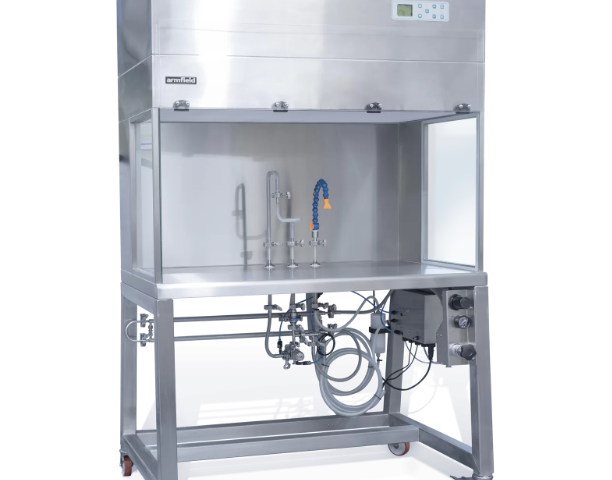
Building Practical Engineering Skills with Armfield
Engineering education is most effective when theoretical knowledge is reinforced by practical experience. Students may understand equations, principles and process diagrams in the classroom, but working with real…

From Nervous Learner to Confident Driver: Making Every Practice Session Count
Confidence Begins Before the Test Learning to drive can feel strange at first. You’re sitting in the driver’s seat, trying to remember mirrors, signals, speed, signs, pedestrians and…