
Building Practical Engineering Skills with Armfield
Engineering education is most effective when theoretical knowledge is reinforced by practical experience. Students may understand equations, principles and process diagrams in the classroom, but working with real equipment helps them see how those principles behave under realistic operating conditions. At Armfield,…
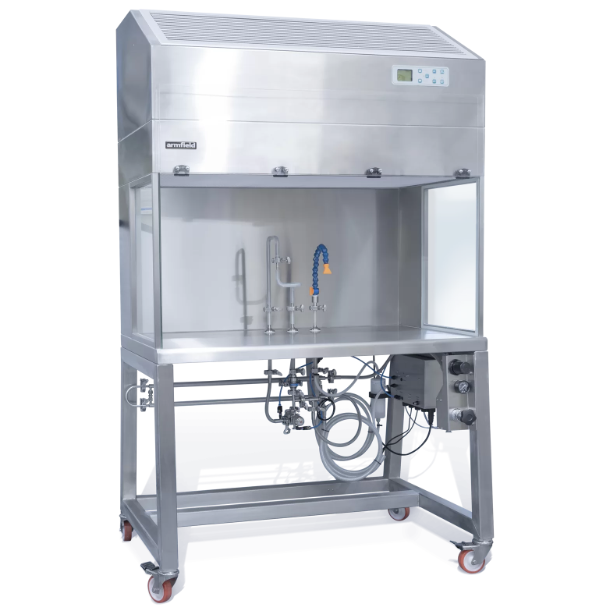
Engineering education is most effective when theoretical knowledge is reinforced by practical experience. Students may understand equations, principles and process diagrams in the classroom, but working with real equipment helps them see how those principles behave under realistic operating conditions. At Armfield, we develop industrial training apparatus designed to help universities, colleges, technical institutes,…
Engineering education is most effective when theoretical knowledge is reinforced by practical experience. Students may understand equations, principles and process diagrams in the classroom, but working with real equipment helps them see how those principles behave under realistic operating conditions.
At Armfield, we develop industrial training apparatus designed to help universities, colleges, technical institutes, research institutions and industrial training centres deliver meaningful hands-on engineering education. Our aim is to bridge the gap between classroom theory and real-world engineering by giving learners opportunities to observe, measure, control, analyse and understand engineering processes in a safe and structured environment.
Armfield industrial training apparatus is used to support practical learning across areas including fluid mechanics, thermodynamics, heat transfer, chemical engineering, process engineering and food technology. Rather than focusing simply on demonstrating a principle, our equipment is designed to help learners develop the analytical and practical skills that they may later need in engineering, research and industry.
Why Industrial Training Apparatus Is Important in Engineering Education
Modern engineering requires more than theoretical understanding.
An engineer may need to interpret instrumentation, compare measured results with theoretical predictions, investigate variations in system performance, identify sources of error and understand how changing one operating parameter influences an entire process.
These skills are difficult to develop through textbooks alone.
This is where industrial training apparatus becomes particularly valuable. A well-designed laboratory system can enable students to take engineering principles they have encountered in lectures and investigate them experimentally.
For example, learners studying fluid mechanics can explore flow behaviour and pressure relationships. Those studying heat transfer can examine how thermal energy moves between different media. Process and chemical engineering students can investigate operating variables and process behaviour.
The objective is not simply to demonstrate that a scientific law exists. It is to encourage students to ask:
- What happens when an operating variable changes?
- Does the experimental result agree with the theoretical prediction?
- Why might the measured value differ from the calculated value?
- How does instrumentation affect the quality of the data?
- What conclusions can be drawn from the experiment?
These are exactly the types of questions that help transform theoretical knowledge into engineering understanding.
Armfield Industrial Training Apparatus for Different Engineering Disciplines
One of the advantages of working with Armfield is the breadth of engineering teaching and research applications available.
Educational institutions rarely have identical laboratory requirements. A university developing a mechanical engineering laboratory may have very different priorities from a college teaching food technology or an institution developing a chemical engineering programme.
For this reason, our approach to industrial training apparatus covers a wide range of engineering disciplines and learning requirements.
Fluid Mechanics
Fluid mechanics is fundamental to numerous engineering industries, including water systems, chemical processing, energy, manufacturing and environmental engineering.
Practical equipment can help students investigate concepts such as flow, pressure, hydraulic behaviour and fluid-system performance.
Being able to observe these principles experimentally can make complex theoretical relationships considerably easier to understand.
Thermodynamics
Thermodynamics is another subject where practical experimentation can add enormous educational value.
Students can move beyond simply calculating theoretical efficiencies and energy balances and begin examining how thermal systems actually behave.
Working with suitable industrial training apparatus helps learners connect concepts such as energy transfer, temperature, pressure and system efficiency with measurable physical processes.
Heat Transfer
Heat transfer plays an important role in engineering systems ranging from industrial production and energy generation to refrigeration, food processing and chemical manufacturing.
Practical laboratory exercises can help students investigate conduction, convection, radiation and heat-exchanger behaviour while developing experience in recording and analysing experimental data.
Chemical and Process Engineering
Chemical and process engineering education requires students to understand how individual operations interact as part of a wider industrial process.
Armfield equipment can support practical investigation of engineering processes while allowing variables to be studied under controlled laboratory conditions.
This gives students an opportunity to develop a better understanding of process behaviour without requiring an institution to reproduce a full-scale industrial plant.
Food Technology and Food Engineering
Food production combines science, engineering and processing.
Our work also includes research and development equipment for food and related industries, allowing educational and research organisations to investigate processing technologies at an appropriate scale.
Armfield’s official quality policy identifies the company as a supplier involved in the design, manufacture, testing, installation, commissioning, training, servicing and repair of engineering teaching equipment, as well as research equipment for food and pharmaceutical industries. Armfield operates a BS EN ISO 9001:2015 certified integrated management system.
Bridging the Gap Between Theory and Real Engineering
One of the most important purposes of industrial training apparatus is to create a bridge between academic education and engineering practice.
Consider a student who has calculated pressure losses mathematically throughout a fluid mechanics module.
The calculations are important. However, the learning experience becomes more complete when that student can operate equipment, take readings, change conditions, compare observations and determine why real experimental results may not perfectly match an ideal mathematical model.
That process develops several important abilities at the same time:
Practical confidence. Students become more comfortable using engineering equipment and instrumentation.
Data interpretation. Learners gain experience collecting results and deciding what those results actually mean.
Problem-solving. Unexpected experimental behaviour encourages students to investigate causes rather than simply follow a calculation.
Technical communication. Laboratory work provides opportunities to document experiments, discuss findings and explain engineering conclusions.
Application of theory. Perhaps most importantly, students discover how theoretical principles relate to physical engineering systems.
These capabilities can help prepare learners for more advanced academic work, research projects and future industrial careers.
A Controlled Environment for Hands-On Learning
Educational laboratories must balance practical experience with effective teaching, repeatability and appropriate control over experimental conditions.
A full industrial plant would rarely be practical for a university teaching laboratory. It may require considerable space, utilities, operational expertise and resources.
Purpose-designed industrial training apparatus offers an alternative.
Students can investigate important engineering principles at laboratory scale while educators retain the ability to structure experiments around specific learning outcomes.
The result is an environment where students can develop practical understanding before encountering larger and more complex industrial systems.
More Than Supplying Laboratory Equipment
Choosing engineering teaching equipment should involve more than comparing individual specifications.
Institutions may also need to consider laboratory design, installation, commissioning, staff familiarity, experiments, learning outcomes and ongoing support.
This is an area in which Armfield takes a broader approach.
Armfield’s published information describes services including consultation for laboratory design and layout, installation and commissioning, product training, learning outcomes and experiments, warranty provision and dedicated after-sales support.
For an institution establishing a completely new engineering laboratory, this can be particularly important. The objective should not simply be to fill a room with equipment. Each system should contribute to a coherent educational programme.
Choosing the Right Industrial Training Apparatus
When considering new laboratory equipment, we recommend beginning with the learning objectives rather than individual products.
Questions worth considering include:
- Which engineering principles must students understand?
- What experiments should they be capable of completing?
- What academic level will use the equipment?
- How many students will normally participate?
- What laboratory space and utilities are available?
- Is the equipment intended primarily for teaching, research or both?
- Will the institution need installation, commissioning or training?
- How might laboratory requirements develop in the future?
Answering these questions makes it easier to create an equipment specification aligned with the curriculum.
At Armfield, we can help organisations identify an appropriate solution rather than treating every laboratory in exactly the same way.
Supporting Universities, Colleges, Research Institutions and Training Centres
Different organisations expect different outcomes from their laboratories.
A university may require equipment capable of supporting undergraduate teaching alongside advanced projects. A technical college may place greater emphasis on practical skills development. A research institution may need equipment suitable for investigation and experimental development. An industrial training centre may want learners to understand principles that relate directly to processes encountered in the workplace.
Our range of industrial training apparatus is intended to address this diversity.
The common objective remains the same: giving learners practical access to engineering principles so that theory becomes something they can investigate, measure and understand.
Developing Engineers for Modern Industry
Engineering continues to evolve, but strong fundamentals remain essential.
Future engineers still need to understand fluid behaviour, thermal processes, heat transfer, process control, measurement, experimentation and analytical thinking.
Effective engineering education therefore needs both academic depth and practical experience.
Armfield industrial training apparatus helps educators bring these two elements together. By enabling students and professionals to work with engineering teaching equipment in controlled laboratory environments, institutions can create learning experiences that go beyond equations and diagrams and develop deeper technical understanding.
For us at Armfield, providing industrial training apparatus is ultimately about more than supplying equipment. It is about helping educators create laboratories where learners can experiment, question, analyse and build the practical skills required for engineering and industrial careers.
Discuss Your Industrial Training Apparatus Requirements with Armfield
Whether you are creating a new engineering laboratory, expanding an existing facility, updating older teaching equipment or looking for a specialised solution for fluid mechanics, thermodynamics, heat transfer, chemical engineering, process engineering or food technology, our team can help you explore the available options.
Tell us about your curriculum, laboratory requirements, available space and the skills you want your students or trainees to develop. We can help you identify an industrial training apparatus solution suited to your educational or research objectives.
Confirm the facts before you commit.
Check deadlines, fees, eligibility, accreditation, admission rules and official notices directly with the relevant institution, examination body or government authority.

From Nervous Learner to Confident Driver: Making Every Practice Session Count
Confidence Begins Before the Test Learning to drive can feel strange at first. You’re sitting in the driver’s seat, trying to remember mirrors, signals, speed, signs, pedestrians and…
Right to Education Act India: What Every Parent Should Know
A few months back, a relative of mine in Jaipur was trying to get her son admitted into a private school under a reserved quota, and honestly, she…