
What’s Actually Different in School Curriculum This Year
Direct answer: New education policy changes in school curriculum for 2026 include a stronger shift toward competency-based learning, reduced textbook content load, integrated skill subjects, and updated assessment patterns that reduce dependency on rote memorization across most CBSE and several state boards.…

Direct answer: New education policy changes in school curriculum for 2026 include a stronger shift toward competency-based learning, reduced textbook content load, integrated skill subjects, and updated assessment patterns that reduce dependency on rote memorization across most CBSE and several state boards. Curriculum Load Reduction: What It Actually Means Textbooks have genuinely gotten leaner.…
Direct answer: New education policy changes in school curriculum for 2026 include a stronger shift toward competency-based learning, reduced textbook content load, integrated skill subjects, and updated assessment patterns that reduce dependency on rote memorization across most CBSE and several state boards.
Curriculum Load Reduction: What It Actually Means
Textbooks have genuinely gotten leaner. NCERT has trimmed a fair amount of repetitive or outdated content across subjects, particularly in science and social studies, aiming to reduce sheer volume without cutting core conceptual understanding.
- Roughly 15-20% content reduction across several subjects compared to older editions
- Removal of some overlapping topics repeated across different grade levels
- Greater emphasis on application-based questions over pure memorization-based ones
New Assessment Patterns Parents Should Understand
- Increased weightage for internal assessments and project-based learning
- Competency-based questions replacing a chunk of traditional descriptive-only formats
- Holistic progress cards covering not just academics but also co-curricular and life skills
- Formative assessments spread across the year, rather than relying solely on final exams
Integration of Skill and Vocational Subjects
I think this is genuinely one of the more meaningful changes, even if rollout has been uneven. Skill subjects like coding, financial literacy, and AI basics are now formally part of the curriculum choices from middle school onward in many boards.
- Coding and computational thinking introduced as early as Class 6 in several states
- Financial literacy modules integrated into mathematics or dedicated skill subjects
- AI and data science exposure offered as electives at the senior secondary level
[link to related guide on skill based education for students here]
How Language Policy Has Shifted
Direct answer: New education policy changes encourage mother tongue or regional language as the medium of instruction up to Class 5 wherever feasible, alongside a three-language formula that promotes multilingual learning without mandating any specific language nationally.
This has been genuinely debated across states, with implementation and reception varying quite a bit depending on regional context.
Impact on Homework and Daily Study Load
- Reduced daily homework load recommended, particularly for younger primary-grade students
- Greater emphasis on experiential and activity-based learning over textbook-only homework
- Encouragement of reading for pleasure through dedicated library and reading periods
Has your child’s daily homework load actually decreased this year, or does it still feel just as heavy? Implementation genuinely varies a lot depending on individual schools, even within the same board.
Preparing Your Child for These Curriculum Changes
- Familiarize yourself with the updated textbook content directly through NCERT’s official website
- Encourage skill-based extracurricular exposure at home to complement the new curriculum focus
- Communicate with teachers directly about how internal assessments are now weighted
- Don’t assume older preparation methods (like heavy rote practice) still align perfectly with current exam patterns
[link to related article on cbse board exam preparation tips here]
FAQs on New Education Policy Changes in Schools
Are these new education policy changes applicable to all boards in India? Primarily rolled out through CBSE and NCERT-aligned state boards; ICSE and some state boards are adopting changes at differing paces.
Has rote learning been completely removed from the new curriculum? Not entirely, but there’s a clear, deliberate shift toward application and competency-based questions over pure memorization.
Do these curriculum changes affect board exam difficulty levels? Not necessarily difficulty, but definitely question style — more application-based scenarios rather than direct textbook recall.
How can parents stay updated on ongoing curriculum changes? Regularly checking NCERT and your specific state education board’s official announcements remains the most reliable method.
Are skill subjects like coding compulsory under the new curriculum? In most cases they’re offered as electives rather than compulsory subjects, though availability varies by school and state.
Conclusion
These new education policy changes represent a genuinely significant shift in how Indian classrooms operate day to day, moving steadily away from pure rote learning toward practical, skill-integrated education. Stay engaged with your child’s actual school communications rather than relying solely on general news headlines, since real implementation details vary quite a bit school to school.
Confirm the facts before you commit.
Check deadlines, fees, eligibility, accreditation, admission rules and official notices directly with the relevant institution, examination body or government authority.
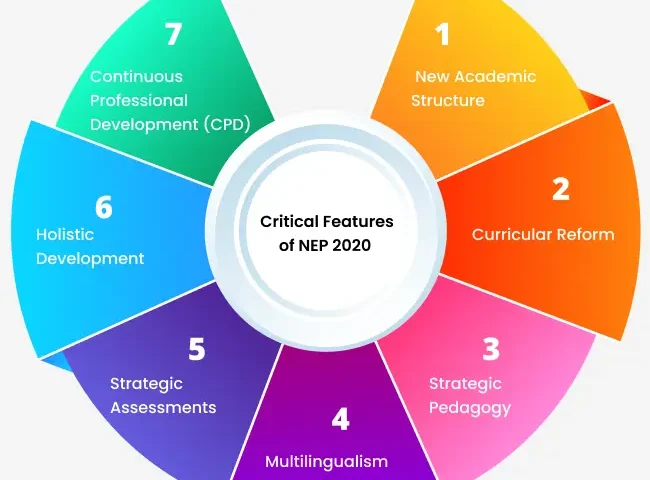
Why Keeping Up With NEP Updates Actually Matters
Direct answer: Tracking nep 2020 latest updates matters because the policy is being rolled out in phases across school curriculum, board exam patterns, and higher education structure, meaning…